Patient-tailored endovascular therapy of the thoracic aorta
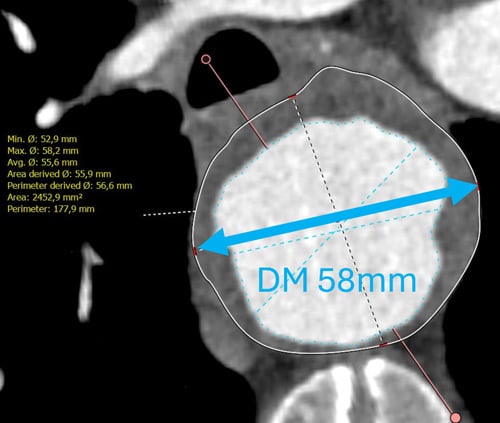
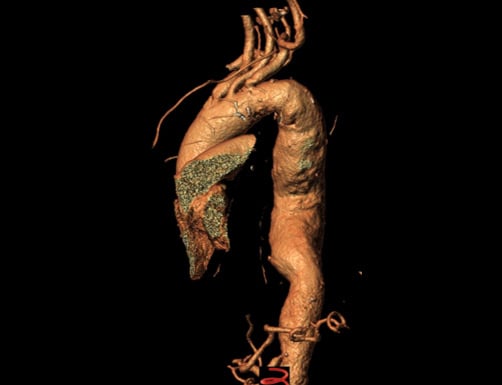
This challenging case features a 65-year-old patient with multiple comorbidities, a 58 mm thoracic aneurysm, and a severely kinked, diseased aorta.
Key questions include configuring the optimal proximal landing zone, navigating complex anatomy during endovascular repair, and reducing the risk of spinal cord ischemia.

Patient / Anatomy
- A 65-year-old male patient.
- Extensive coronary artery disease – PCI to RIM; chronic total occlusion of RCA.
- Smoking history: 50 pack-years.
- COPD.
- Type 2 diabetes mellitus.
- CKD II.
- Severe depression.
- Hyperlipidemia (HLP).
- Progressive aneurysm, diameter 58 mm.
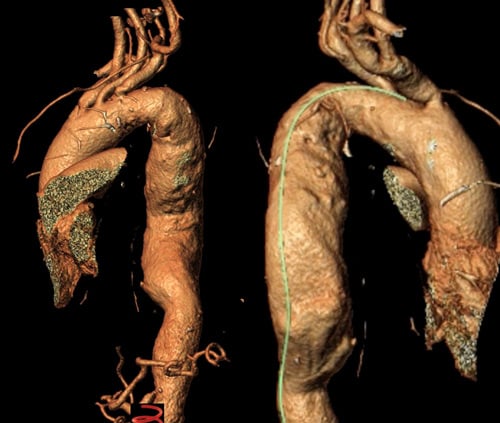
- Kinked anatomy (proximal descending!).
- Diseased aorta and Iliac arteries.
Distal Arch / Proximal descending
Length & extent
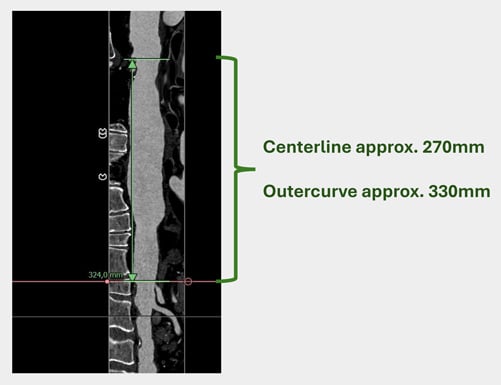
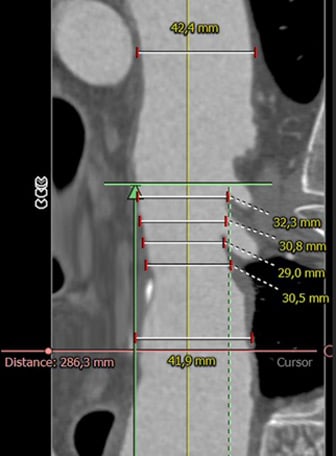
Distal landing zone
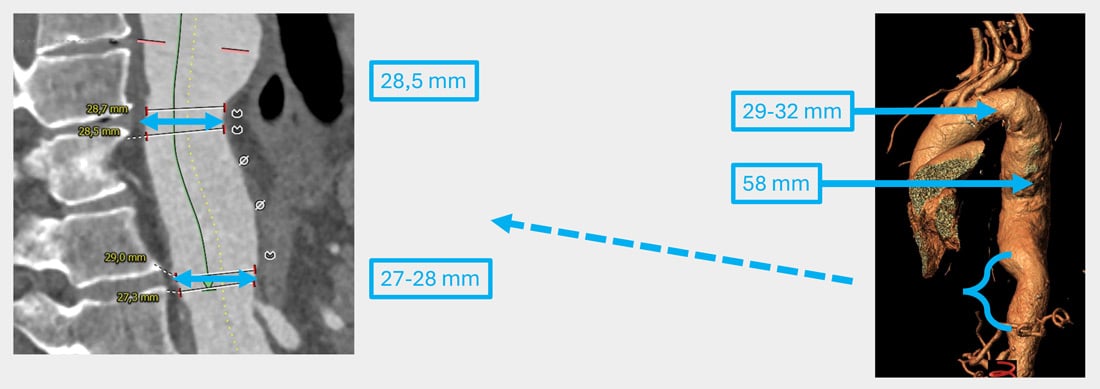
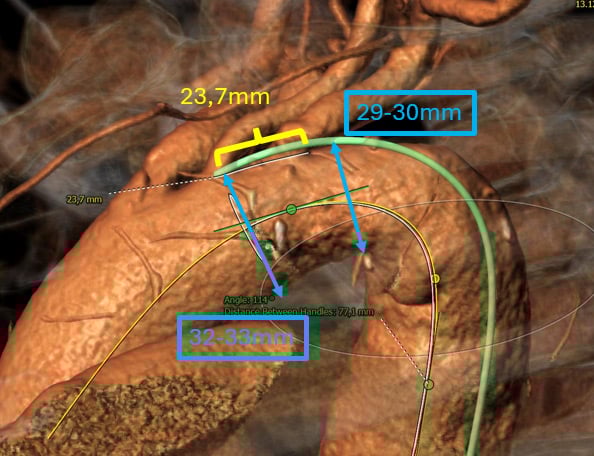
Proximal sealing concept
- From our perspective, adequate proximal sealing is feasible with a branched solution.
- We always try to preserve the left subclavian artery.
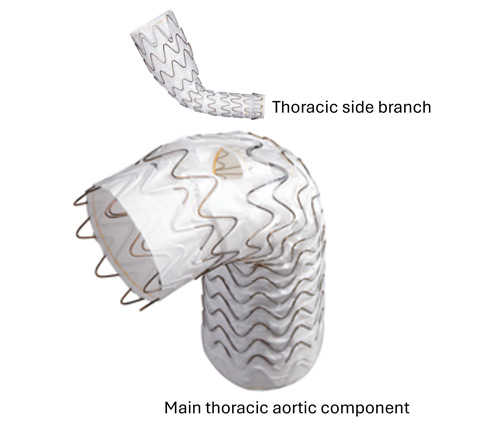
- In this case, we propose the GORE® TAG® Thoracic Branch Endoprosthesis (TBE) as an off-the-shelf option with good conformability to kinked aortic pathology.
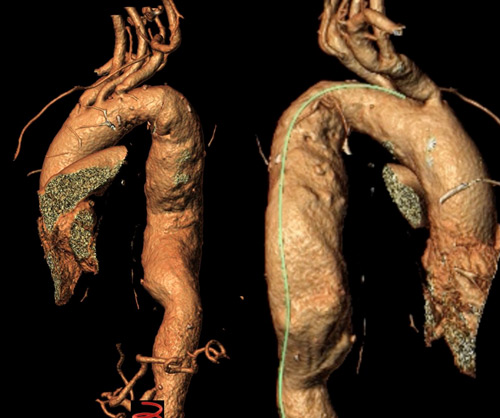
Step 1
GORE® TAG® Thoracic Branch Endoprosthesis (TBE)
Challenging branch take-offs may require specific angulations!
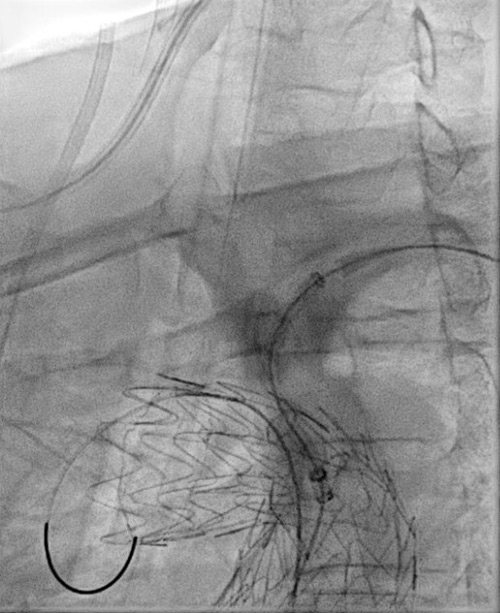
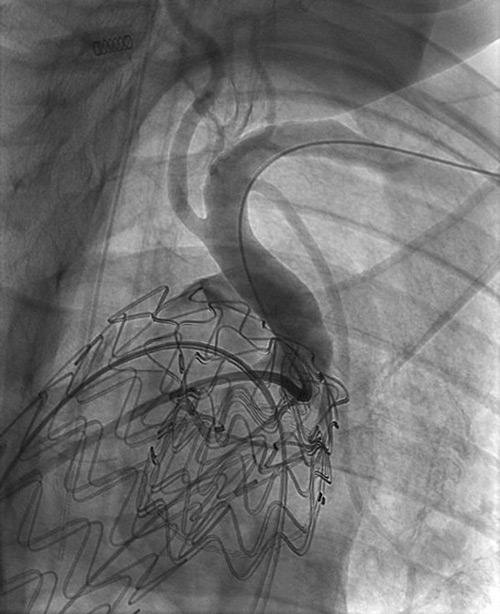
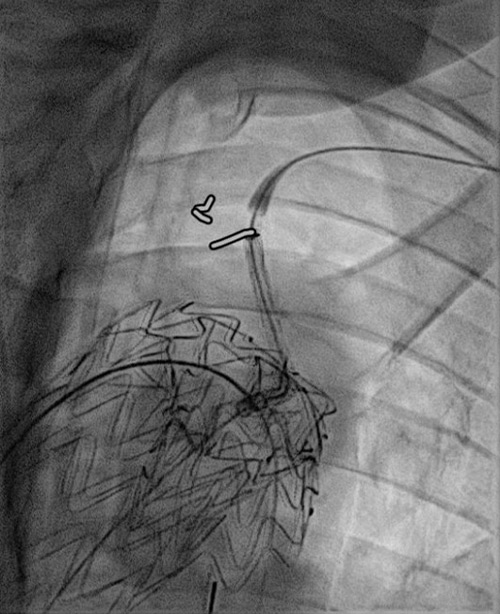
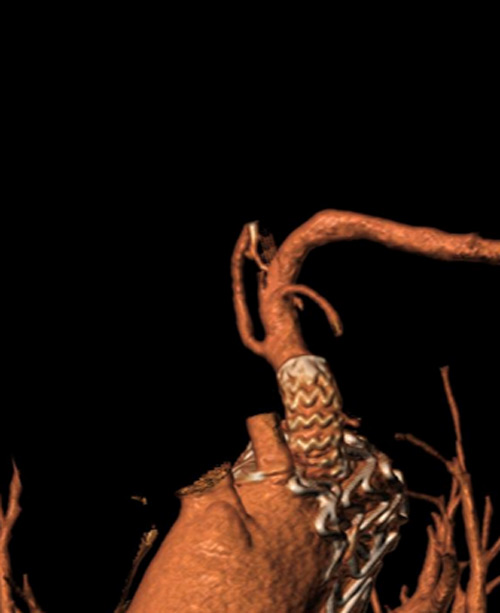
Step 1: result
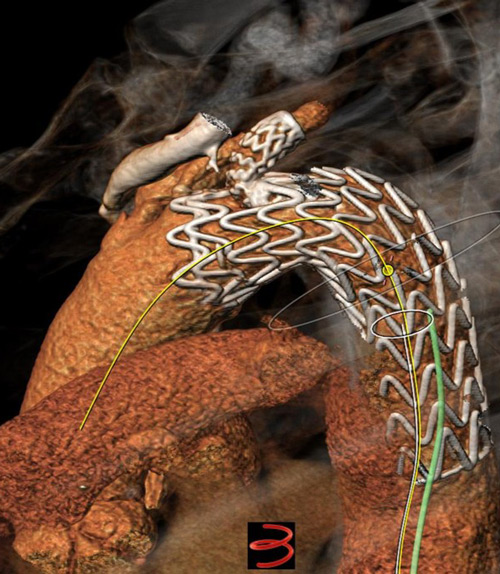
Staged approach for spinal cord protection
- Planning of a staged procedure to minimise the risk of spinal cord ischaemia.
- TBE in 1st step followed by two TEVAR components after 8 weeks.
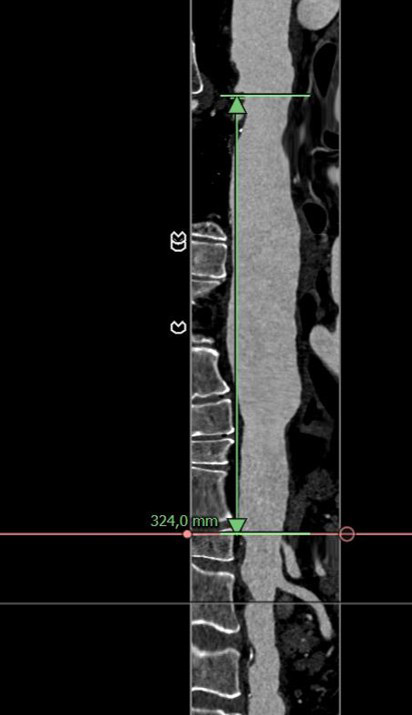
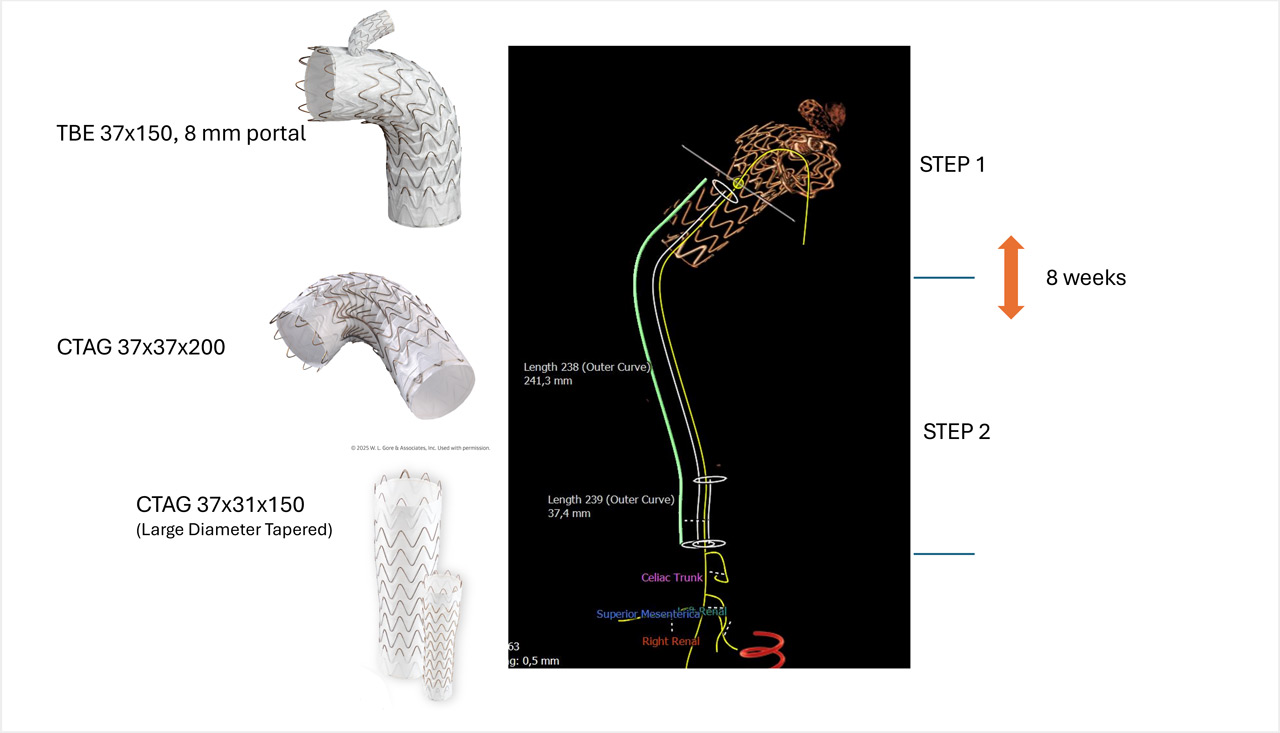
Step 2 (after 8 weeks):
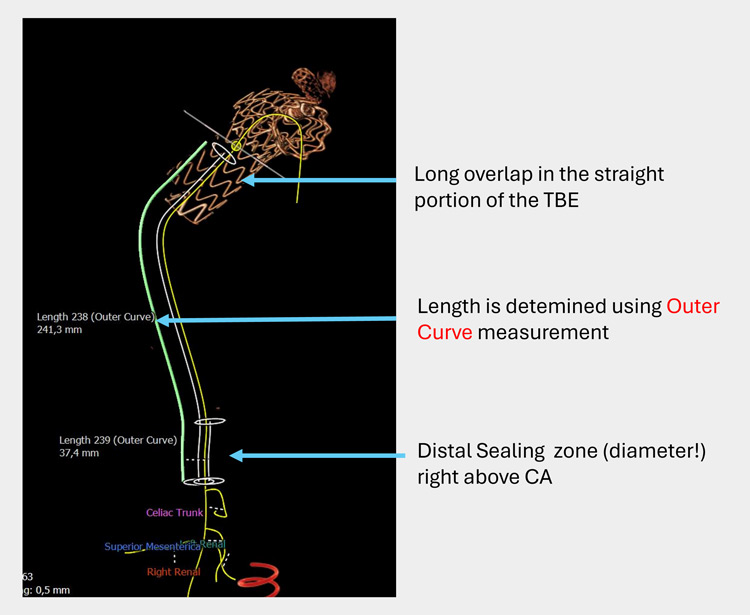
Distal optimisation and future treatment option
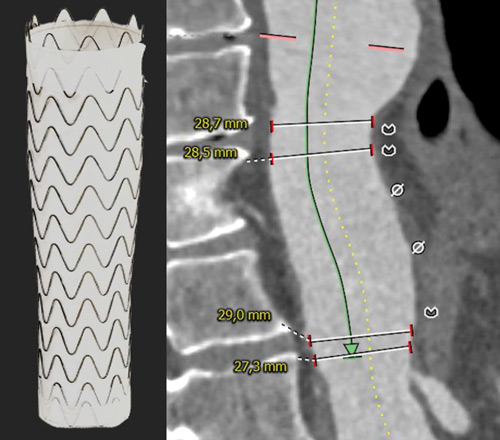
- Further extension of the 37 x 200 mm Gore® TAG® Conformable with a large diameter tapered 37/31 x 150 mm TAG® Conformable
- At the same time, preparation for a potential later extension into the abdominal aorta, should the disease progress and become treatment-indicated in this segment.
- Reduction of the risk of a distal stent graft–induced new entry (dSINE) and improved adaptation to the patient’s anatomy.
37 TAG® Conformable in 37 TBE -> Long overlap!
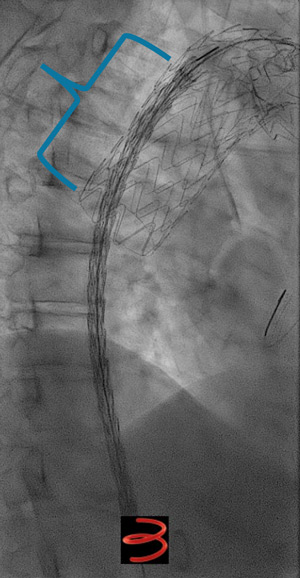
Staged deployment of the tapered TAG® Conformable with precise control of the distal landing zone.
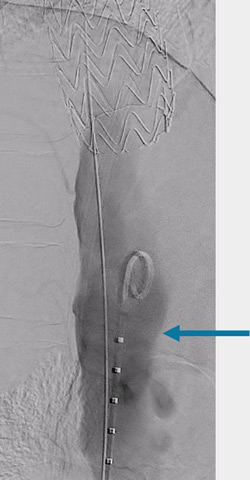
Ballooning under controlled hypotension with a Tri-Lobe balloon.
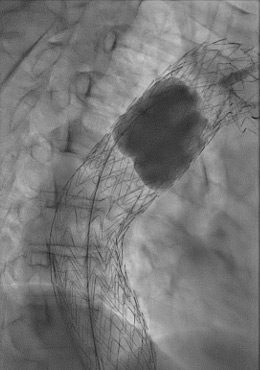
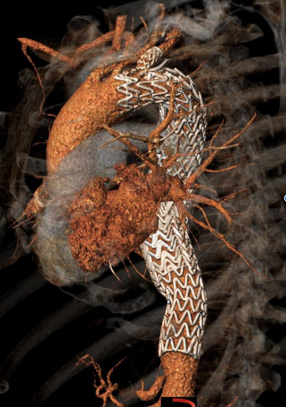
- No peri-operative complications.
- Uneventful hospital course.
- No neurological events.
- Uneventful follow-up.
Conclusions
- Branched and tapered endovascular solutions can optimise both proximal and distal sealing zones.
- Tapered stent-graft configurations may reduce wall-stress–related stent graft–induced new entry (SINE).
- Both concepts enable an endovascular repair strategy tailored to the individual patient’s anatomy and pathology.
- Tapered solutions provide an additional option to facilitate future extensions without the need for further custom-made components.
Concept / Strategy Overview
Proximal sealing concept
- Multimorbid patient – endovascular approach is proposed.
- Proximal sealing zone is limited.
- Adequate proximal sealing is considered achievable with a branched solution.
- Proposed device: GORE® TAG® Thoracic Branch Endoprosthesis (TBE).
- Advantages: off-the-shelf availability and good conformability to kinked aortic pathology.
Two-stage approach for spinal cord protection
- Planning of a staged procedure to minimise the risk of spinal cord ischaemia.
Patient-specific anatomical adaptation / distal optimisation and future treatment option
- Adaptation to the patient’s individual anatomy by extending the 37 mm TBE with an additional 37 mm TAG® Conformable with long overlap.
- Further extension of the 37 mm TAG® Conformable with Large Diameter Tapered TAG® Conformable to match the distal aortic diameter.
- At the same time, preparation for a potential later extension into the abdominal aorta, should the disease progress and become treatment-indicated in this segment.
- Reduction of the risk of a distal stent graft–induced new entry (dSINE) and improved adaptation to the patient’s anatomy.
Access strategy and procedural technique
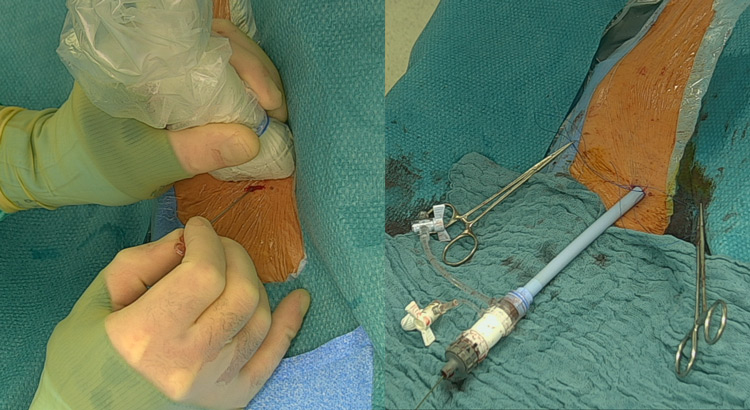
- Both procedures are performed completely percutaneously with ultrasound-guided access and use of a preclose technique.
- This optimises the staged approach and reduces the risk of access-vessel complications.
Dr. Florian Elger: workshops and speaker for W.L. Gore, workshops and proctor for Terumo Aortic
Supported through an unrestricted educational grant from Gore

Get the latest clinical cases and breaking news delivered straight to your inbox!
