The next chapter in drug-coated technology
Drug-coated technologies continue to evolve in peripheral arterial disease, with their value increasingly assessed through patient-centred outcomes, long-term durability and economic impact.
Defining their role in complex disease settings and addressing the remaining evidence gaps will be essential to guiding future clinical practice.


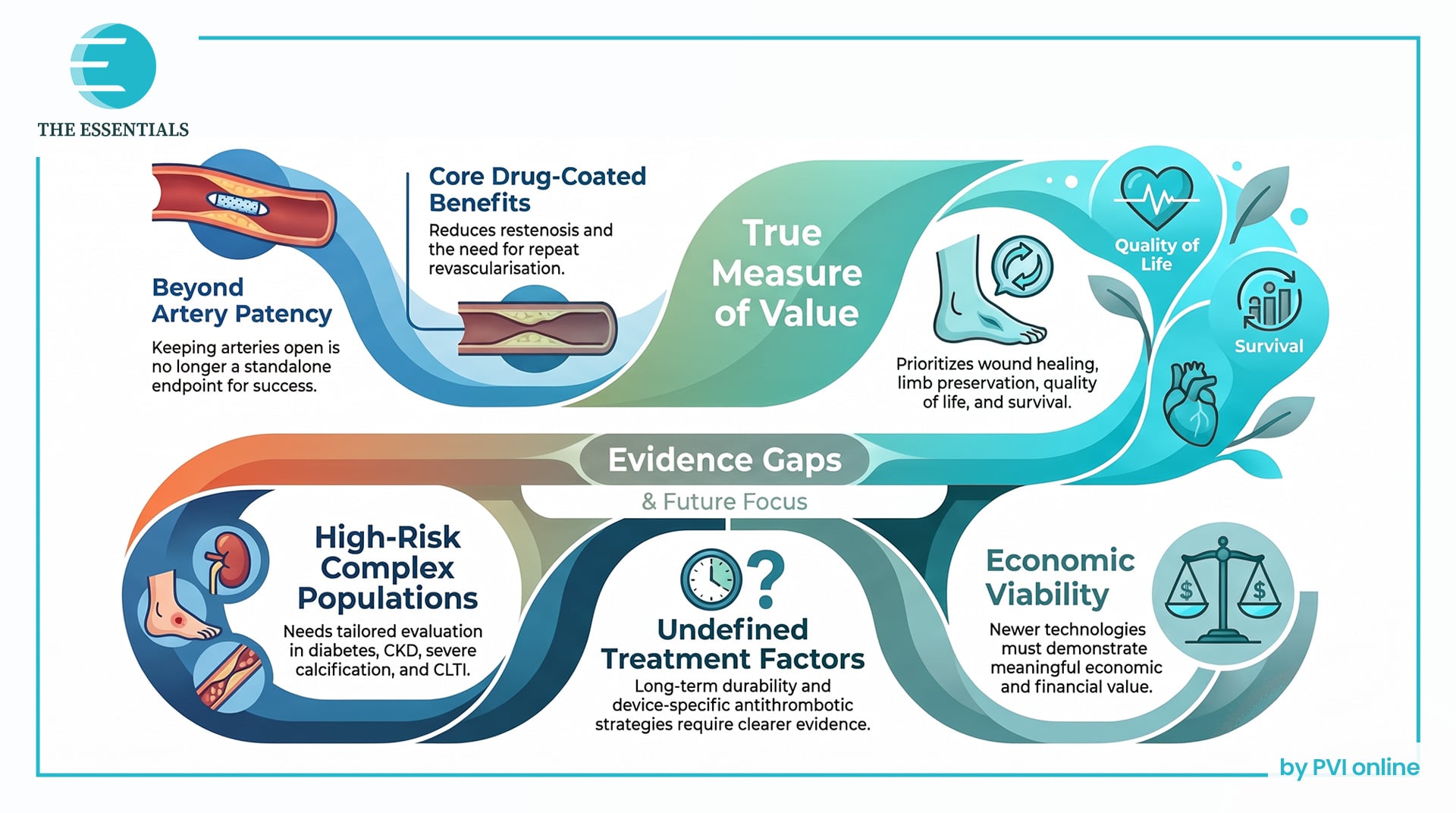
Drug-coated technologies have transformed endovascular treatment of peripheral arterial disease by reducing restenosis and the need for repeat revascularisation. However, improved patency should not be considered an endpoint in itself. The ultimate value of these technologies lies in their ability to improve symptoms, wound healing, limb preservation, functional outcomes, quality of life and survival.
The next generation of evidence should therefore focus on identifying which technology is most appropriate for each patient and lesion, particularly in complex populations such as those with chronic limb-threatening ischaemia (CLTI), diabetes, chronic kidney disease (CKD), severe calcification and complex below-the-knee disease. Long-term durability, device-specific antithrombotic strategies and the economic implications of newer technologies also remain incompletely defined.
The future of drug-coated therapy will ultimately depend not on keeping arteries open alone, but on demonstrating durable, patient-centred and economically meaningful clinical benefit.
In this exclusive interview, Prakash Krishnan and Eric Ducasse take a critical look at the evolving landscape of drug-coated technologies in peripheral artery disease (PAD).
From landmark clinical trials and the ongoing debate over sirolimus versus paclitaxel to vessel preparation and the complementary or competing roles of atherectomy and intravascular lithotripsy (IVL), they examine what determines the effectiveness of drug-coated balloons (DCBs) and drug-eluting stents (DESs).
The discussion also addresses the implications of SWEDEPAD II, recent European recommendations for claudicants, key clinical endpoints in the superficial femoral artery (SFA) and below-the-knee (BTK) territories, and the challenge of demonstrating cost-effectiveness.
Challenging established assumptions, they also consider what needs to evolve in device design, pharmacological approaches and treatment strategies to improve patient outcomes.
Which controversies remain unresolved, and what lies ahead for drug-coated technologies? Hit play to hear the editors’ take!
This special report is available thanks to the support of iVascular.
PVI online develops independent educational programmes.

Get the latest clinical cases and breaking news delivered straight to your inbox!
